10 Best Smartwatches of 2026, Researched & Ranked
The most important smartwatch specification is not a sensor at all. It is which phone the watch pairs with, because that single fact removes most of the market before you compare anything else. Our top pick is the Apple Watch Series 11, which combines the deepest sensor suite here with software that turns those readings into something useful, for iPhone owners only.
Ranked below are ten watches judged on sensor accuracy, phone compatibility, realistic battery life and training depth. Five work with both Android and iPhone, which matters more than most guides admit. The buying guide afterwards explains what the health claims genuinely mean and what quietly costs extra.
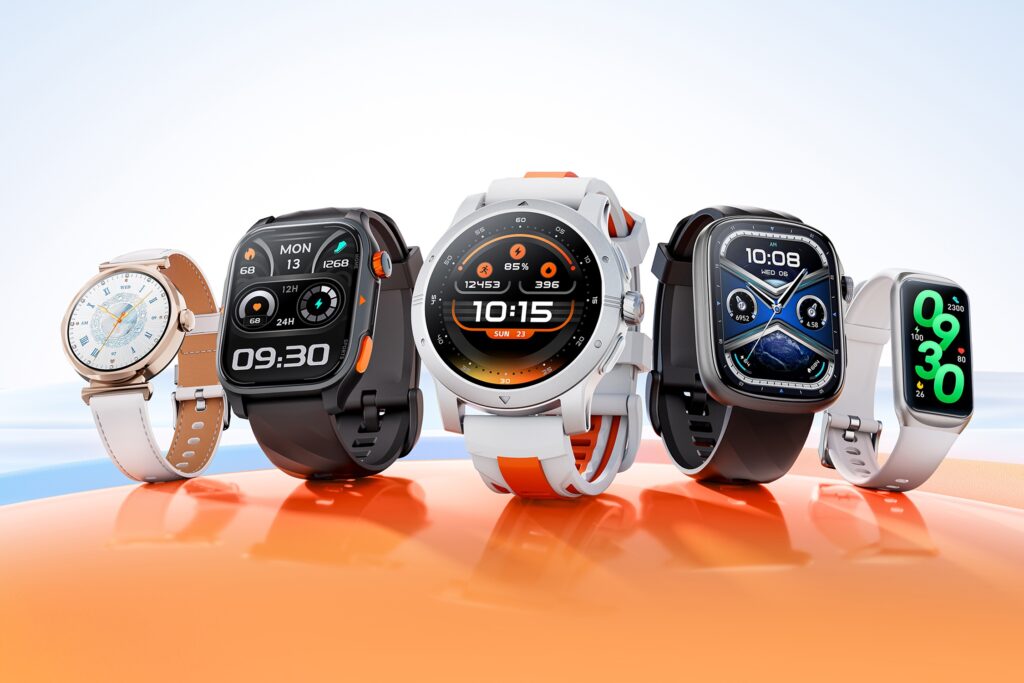

- Health sensors: Hypertension notifications and sleep scoring join an already deep sensor suite
- Everyday wear: The thinnest Series case yet sits comfortably under a shirt cuff
- Training tools: Workout tracking covers everything from swimming to strength sessions properly
- Battery stamina: A full day of use with fast charging that refills most of it quickly
- Screen and controls: The wide-angle screen stays readable at an angle without raising your wrist
- Connected extras: Satellite messaging and cellular options extend it well beyond the phone
- iPhone only: It pairs with iPhone alone, ruling it out for Android users

- Health sensors: Body composition and an antioxidant reading go beyond the usual sensor list
- Everyday wear: The squircle case sits flatter against the wrist than round rivals manage
- Training tools: Running coach features build structured plans rather than only logging sessions
- Battery stamina: Around 40 hours of use covers a full day and the night that follows
- Screen and controls: A 3000-nit screen stays legible in direct summer sunlight without squinting
- Connected extras: LTE and an on-device assistant let it work while the phone stays home
- Android only: This pairs with Android phones only, so iPhone users must look elsewhere
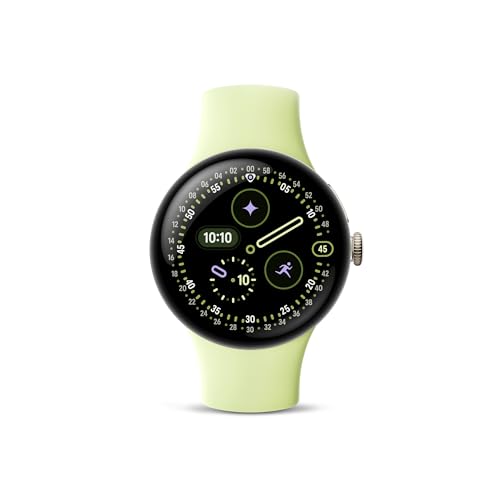
- Health sensors: Loss of Pulse detection is a safety feature no other watch here offers
- Everyday wear: The domed glass and light case make it easy to forget you are wearing it
- Training tools: Fitbit's exercise tracking arrives built in rather than as a separate app
- Battery stamina: Roughly 30 hours of use, enough for a day plus overnight sleep tracking
- Screen and controls: The bright domed display resists glare better than flat screens do outdoors
- Battery: Thirty hours trails the multi-day watches further down this list

- Health sensors: Body Battery and nap detection add context that raw step counts never provide
- Everyday wear: A light case and quick-release straps make all-day and all-night wear easy
- Training tools: Garmin's training analysis is the most thorough here for structured exercise
- Battery stamina: Up to 14 days between charges, which changes how you actually use it
- Screen and controls: The AMOLED screen matches phone-brand watches while lasting far longer
- App polish: Its companion app feels dated next to the phone-brand alternatives

- Health sensors: A depth gauge and dive certification put it beyond any other watch listed
- Everyday wear: The titanium case shrugs off knocks that would mark an aluminium watch
- Training tools: Multisport tracking handles open water, trail running and cycling equally well
- Battery stamina: Forty-two hours of use, and considerably longer once low power mode engages
- Screen and controls: A 3000-nit screen stays readable in bright sun and under water alike
- Case size: The 49mm case is genuinely large and overwhelms a slim wrist

- Health sensors: Training Readiness combines sleep, recovery and load into one usable score
- Everyday wear: At 47g it is light enough to forget during a long weekend run
- Training tools: Dual-band positioning holds accuracy between buildings where single-band drifts
- Battery stamina: Roughly 13 days of smartwatch use, or 20 hours with full satellite tracking
- Plain styling: It looks like sports equipment rather than a piece of jewellery

- Health sensors: Body composition and sleep staging appear at a fraction of the usual outlay
- Everyday wear: Sapphire glass resists the scratches that dull cheaper watch faces quickly
- Training tools: Offline maps and dual-band positioning cover hiking as well as road running
- Battery stamina: Multi-week battery life outlasts every phone-brand watch on this list
- Screen and controls: Voice control works on the watch without reaching for a phone at all
- Thin ecosystem: Third-party app support is thin next to the major platforms
- Notifications: Handling of phone alerts is basic and cannot manage replies
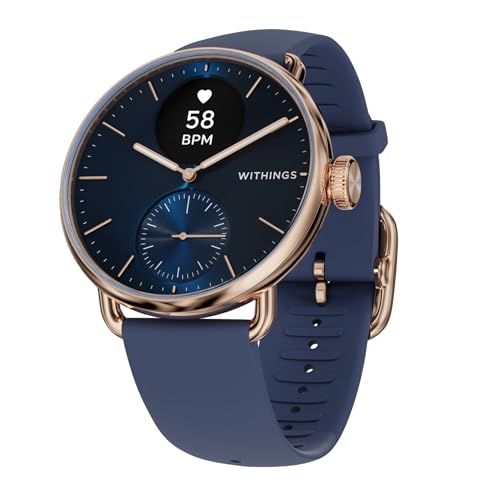
- Health sensors: Medical-grade ECG and continuous temperature tracking in a conventional watch case
- Everyday wear: Real hands and a steel case mean it passes as ordinary jewellery entirely
- Training tools: Activity tracking covers the basics well without pretending to coach you
- Battery stamina: Thirty days between charges, the longest interval anywhere on this list
- Tiny screen: The small OLED window shows very little information at once
- Basic sport: Sports tracking is limited next to the dedicated fitness watches

- Health sensors: Offline topographic maps make it genuinely useful away from any phone signal
- Everyday wear: At 45g with a titanium bezel it wears lightly for a rugged watch
- Training tools: Over ninety sport modes cover almost anything you might reasonably attempt
- Battery stamina: Around 12 days of daily use, or 30 hours with full satellite tracking
- Ecosystem: Its app community is smaller than Garmin's by a wide margin
- Notifications: Phone notification handling is basic and cannot be replied to

- Health sensors: Training load and recovery analysis rival watches costing considerably more
- Everyday wear: An ultralight build disappears on the wrist during long training sessions
- Training tools: Structured workouts sync straight from a plan without any manual entry
- Battery stamina: Multi-week battery life with long full-satellite recording for endurance events
- Smart features: It does very little beyond training, with minimal app support
- Small community: Fewer third-party integrations exist than for the bigger brands
All Ten Smartwatches in Detail
Each entry names the phone platform it works with, what it measures well, and where it gives ground to the others.
#1 · Editor's Choice
Apple Watch Series 11 GPS Smartwatch
Apple keeps winning this category for a boring reason: the sensors are good and the software around them is better. Hypertension notifications and a proper sleep score arrive on the thinnest Series case so far, which matters because a watch you find bulky at night never records the sleep data you bought it for. Battery life reaches a day rather than a week, so charging becomes a routine. It works with iPhone only, which disqualifies it outright for Android users no matter how good it is.
The verdict: The most capable smartwatch available, provided you carry an iPhone to pair it with.
#2 · Runner-Up
Samsung Galaxy Watch 8 LTE Smartwatch
Samsung's answer to Apple matches it sensor for sensor and then adds a few of its own, including body composition readings taken through the case back. The squircle shape sits flatter than a round watch, which sounds trivial until a sleeve catches on a raised bezel. Roughly 40 hours means one charge covers a day and the night's sleep tracking afterwards. Like the Apple above it, this only pairs with one platform, so Android is the requirement rather than a preference.
The verdict: The strongest Android smartwatch, with sensors that match anything Apple ships.
#3 · Best Google Integration
Google Pixel Watch 4 Android Smartwatch
Google folded Fitbit's tracking into its own watch, and the combination finally feels coherent rather than bolted together. Loss of Pulse detection is genuinely novel, calling for help if it detects your heart has stopped, and satellite SOS covers areas with no phone signal. The domed screen is lovely and the case is light enough to forget. Battery life is only about 30 hours, so this joins the nightly charging crowd rather than the weekly one.
The verdict: The best pick for Android users deep in Google services, if nightly charging suits.
#4 · No Subscription Needed
Garmin Venu 3 Fitness and Health Smartwatch
Fourteen days between charges is the specification that reframes everything else. Sleep tracking only works if the watch is on your wrist at night, and a watch needing nightly charging quietly stops recording sleep within a month. Garmin also charges nothing for its analysis, where several rivals gate insights behind subscriptions. Nap detection and Body Battery give useful context rather than more numbers. The app looks dated beside Apple's or Samsung's, and it works with both platforms equally, which few here manage.
The verdict: The best health tracker here for real-world wear, with no subscription attached.
#5 · Toughest Build
Apple Watch Ultra 3 Titanium Adventure Smartwatch
Titanium, a 100 metre water rating and genuine dive certification put this in a different category from the Series 11 above. Satellite messaging works where no phone signal exists, and the 86 decibel siren is the kind of feature you hope never to need. Battery reaches 42 hours, roughly double the standard model. The case is large, and on a slim wrist it looks and feels like a piece of equipment rather than a watch. For hikers, divers and anyone working outdoors, that is the point.
The verdict: The most durable watch here by a distance, if the size and platform suit you.
#6 · Best for Runners
Garmin Forerunner 265 Running GPS Smartwatch
Runners keep choosing Garmin, and this is the model that explains why. Training Readiness pulls sleep, recovery and recent load into one score that tells you whether today should be hard or easy, which is more useful than another chart. Dual-band positioning holds a line between tall buildings where cheaper watches wander across the road. At 47g you forget it exists. Smart features trail the phone brands and the styling is plainly sporty, so this is a training tool first.
The verdict: The best running watch here, provided smart features are not your priority.
#7 · Longest Battery
Amazfit Balance 3 Sapphire Glass Smartwatch
Sapphire glass, dual-band positioning and offline maps at this price seem implausible until you notice where Amazfit economises: the app ecosystem. Third-party support is thin, so this is a tracker with notifications rather than a wrist computer. What it does, it does for weeks at a time, which is the trade many buyers actually want. Body composition and sleep staging are both here. Against the Venu 3 it gives up polish and gains endurance, and it costs a good deal less than either phone-brand flagship.
The verdict: Extraordinary endurance and sensors for the outlay, with a thin app ecosystem.
#8 · Best Hybrid Design
Withings ScanWatch 2 Hybrid Analogue Smartwatch
Not everyone wants a screen on their wrist, and this is the answer for those who do not. Analogue hands over a small OLED window mean it reads as a normal watch across a table, while a medical-grade ECG and continuous temperature tracking run underneath. No other watch here runs a full month on one charge. The window shows very little at a glance and sports tracking is basic against the Forerunner. As a health monitor you would happily wear to a wedding, nothing else competes.
The verdict: Serious health tracking hidden inside a watch nobody would identify as smart.
#9 · Best Outdoor Mapping
Suunto Race S Outdoor Multisport Smartwatch
Offline topographic maps are the reason to consider this over cheaper multisport watches. Load a region before you leave and the watch navigates without any phone signal, which matters more than any sensor once you are properly out of range. A digital crown makes zooming into that map straightforward, and 45 grams keeps it light for a rugged design. Suunto's app community is far smaller than Garmin's, and notification handling is basic. For hill walking and trail running, it undercuts map-capable Garmins meaningfully.
The verdict: Proper offline mapping for less than Garmin charges, with a smaller software community.
#10 · Best for Athletes
Coros Pace 4 Ultralight Running GPS Watch
Coros built its reputation among endurance athletes, and the Pace 4 shows why. Dual-frequency positioning and serious training analysis arrive in an ultralight case, with no subscription gating any of it. Structured sessions sync from a plan and appear on the wrist ready to run. Battery life is measured in weeks, and full satellite recording lasts long enough for an ultramarathon. Smart features barely exist here, and the third-party ecosystem is small. For someone training toward a specific race, none of that matters.
The verdict: A focused training watch for people with a race in the calendar, not a wrist computer.
How We Researched and Scored These Smartwatches
Published testing from wearables specialists and consumer technology titles forms the basis here, and we cross-checked each claim against manufacturer specifications and live retail listings. No wrist-worn trial of ours sits behind this ranking. Fifteen watches entered our shortlist and ten survived, all confirmed as currently sold in new condition rather than refurbished.
- Sensor accuracy: what each watch measures and how well independent testing says it measures it, weighted toward heart rate and sleep.
- Platform compatibility: which phones each works with, since this disqualifies watches before any other factor applies.
- Battery in real use: realistic figures with the screen behaving normally, not best-case numbers from a stripped-back mode.
- Training depth: whether the watch coaches or merely records, and whether any of that sits behind a subscription.
- Wearability: case size and weight, because a watch too bulky for sleep never records the sleep data it advertises.
Sensor accuracy and battery carried roughly thirty per cent each, training depth about twenty five, with wearability breaking ties. Three watches were dropped: two were listed only as refurbished units, and one returned no watch listing at all, only charging docks and screen protectors.
One integrity note: no manufacturer had input into this ranking, and no placement was paid for. Nothing here is medical advice, and none of these watches replaces a clinician.
What to Look For in a Smartwatch
Phone compatibility comes first, because it removes options before anything else matters. Apple's watches pair with iPhone alone. Samsung's and Google's pair with Android alone. Garmin, Amazfit, Withings, Suunto and Coros work with both, which is why cross-platform households and anyone who switches phones regularly should start there rather than with a phone-brand watch.
Battery figures need reading carefully, since manufacturers quote very different conditions. A day or two is normal for phone-brand watches with bright always-on screens, while dedicated fitness brands reach one to four weeks. The practical consequence is sleep tracking: a watch that needs nightly charging usually stops recording sleep once the novelty fades.
Health features are not equivalent just because they share a name. An ECG feature cleared by a regulator differs from a heart rate graph, hypertension notifications differ from blood pressure measurement, and sleep apnea detection flags a possible pattern rather than diagnosing anything. Read what each claim actually says, and treat every reading as a prompt to see a doctor rather than an answer.
Finally, check what costs extra. Some platforms gate their most useful analysis behind a monthly subscription, while Garmin, Coros and Suunto include everything. Over three years of ownership that difference can exceed the price of the watch itself, which changes the comparison entirely.
Who Needs a Smartwatch (and Who Really Does Not)
Anyone tracking a health condition with a clinician's knowledge gains the most, particularly from ECG and sleep features. The Series 11 and the ScanWatch 2 both suit that use, one with a full app ecosystem and one hidden inside a conventional watch case. Neither replaces medical equipment, and both are useful for spotting patterns worth raising.
Runners and cyclists training toward an event should look at the dedicated brands rather than the phone makers. The Forerunner 265 and the Pace 4 both offer training analysis with no subscription, and both last long enough that charging never interrupts a training block. Hikers wanting maps away from signal should take the Race S.
People who mainly want notifications, payments and step counts are well served by whichever watch matches their phone. Buyers who resent charging another device nightly should look at the Balance 3 or the ScanWatch 2, both of which run for weeks.
Who should skip a smartwatch? Anyone who finds constant notifications intrusive, since a watch multiplies rather than reduces them. Anyone hoping a wearable will diagnose a condition should also see a doctor instead, because none of these devices is built for that job.
Test Results
| Watch | Works with | Battery | Standout sensor | Subscription | Overall |
|---|---|---|---|---|---|
| Apple Watch Series 11 GPS Smartwatch | iPhone only | Up to 24 hours | Hypertension notifications | Not required | 9.8 |
| Samsung Galaxy Watch 8 LTE Smartwatch | Android only | Up to 40 hours | Body composition | Not required | 9.6 |
| Google Pixel Watch 4 Android Smartwatch | Android only | Up to 30 hours | Loss of Pulse detection | Not required | 9.4 |
| Garmin Venu 3 Fitness and Health Smartwatch | Both platforms | Up to 14 days | Body Battery | Not required | 9.3 |
| Apple Watch Ultra 3 Titanium Adventure Smartwatch | iPhone only | 42 hours | Depth gauge | Not required | 9.5 |
| Garmin Forerunner 265 Running GPS Smartwatch | Both platforms | Up to 13 days | Training Readiness | Not required | 9.2 |
| Amazfit Balance 3 Sapphire Glass Smartwatch | Both platforms | Multi-week | Body composition | Not required | 8.9 |
| Withings ScanWatch 2 Hybrid Analogue Smartwatch | Both platforms | Up to 30 days | Medical-grade ECG | Not required | 8.8 |
| Suunto Race S Outdoor Multisport Smartwatch | Both platforms | Up to 12 days | Offline topographic maps | Not required | 8.6 |
| Coros Pace 4 Ultralight Running GPS Watch | Both platforms | Multi-week | Training load analysis | Not required | 8.5 |
Frequently Asked Questions
Do smartwatches work with any phone or only one platform
It depends entirely on the brand. Apple watches pair with iPhone alone, while Samsung and Google watches pair with Android alone. Garmin, Amazfit, Withings, Suunto and Coros all work across both platforms. If you switch phones regularly, or your household mixes the two, the cross-platform brands save an expensive mistake later.
How accurate are smartwatch heart rate sensors
Reasonably accurate at rest, and less so during hard exercise. Wrist sensors read blood flow through skin, so movement, tattoos, cold weather and a loose strap all degrade the reading. Independent testing consistently finds chest straps more reliable for interval work. For resting rate, sleep and general trends, a wrist sensor is perfectly adequate.
How long do smartwatch batteries really last day to day
Between about a day and roughly a month, depending on the brand. Phone-brand watches with bright always-on screens run 24 to 42 hours, dedicated fitness watches manage one to two weeks, and hybrid designs stretch to thirty days. Enabling always-on display, satellite tracking and cellular will each cut those figures noticeably.
Can a smartwatch detect sleep apnea
Several here flag possible signs of it, which is not the same as diagnosing it. The feature watches for breathing disturbances overnight and suggests you seek advice if a pattern appears. That prompt has genuine value, because many people never suspect they have a problem. Confirmation still requires a proper sleep study.
Do I need LTE on a smartwatch
Only if you want the watch working away from your phone. Cellular lets you take calls, stream music and send messages while the phone stays behind, which suits runners and swimmers. It adds cost, needs a monthly plan and drains the battery faster. Most buyers never activate it and lose nothing by choosing the cheaper version.
Which smartwatch features cost extra through a subscription
Yes, and every watch listed here handles it. Ratings run from 50 metres on most models to 100 metres with dive certification on the Ultra 3. A 50 metre rating covers swimming and showering comfortably. Rinse the case in fresh water after sea swimming, since salt residue degrades seals and straps over time.
The Bottom Line
Apple's Series 11 wins on breadth, turning the deepest sensor suite here into advice rather than raw charts, and iPhone owners should start there. Android users get an equally strong answer in the Samsung Galaxy Watch 8. Anyone who resents nightly charging, or who switches between platforms, will be happier with the Garmin Venu 3, which tracks nearly as much and runs for two weeks. Check compatibility before anything else.
As an Amazon Associate I earn from qualifying purchases. See our affiliate disclosure for details. Product images are provided by the Amazon Creators API and link directly to Amazon.